
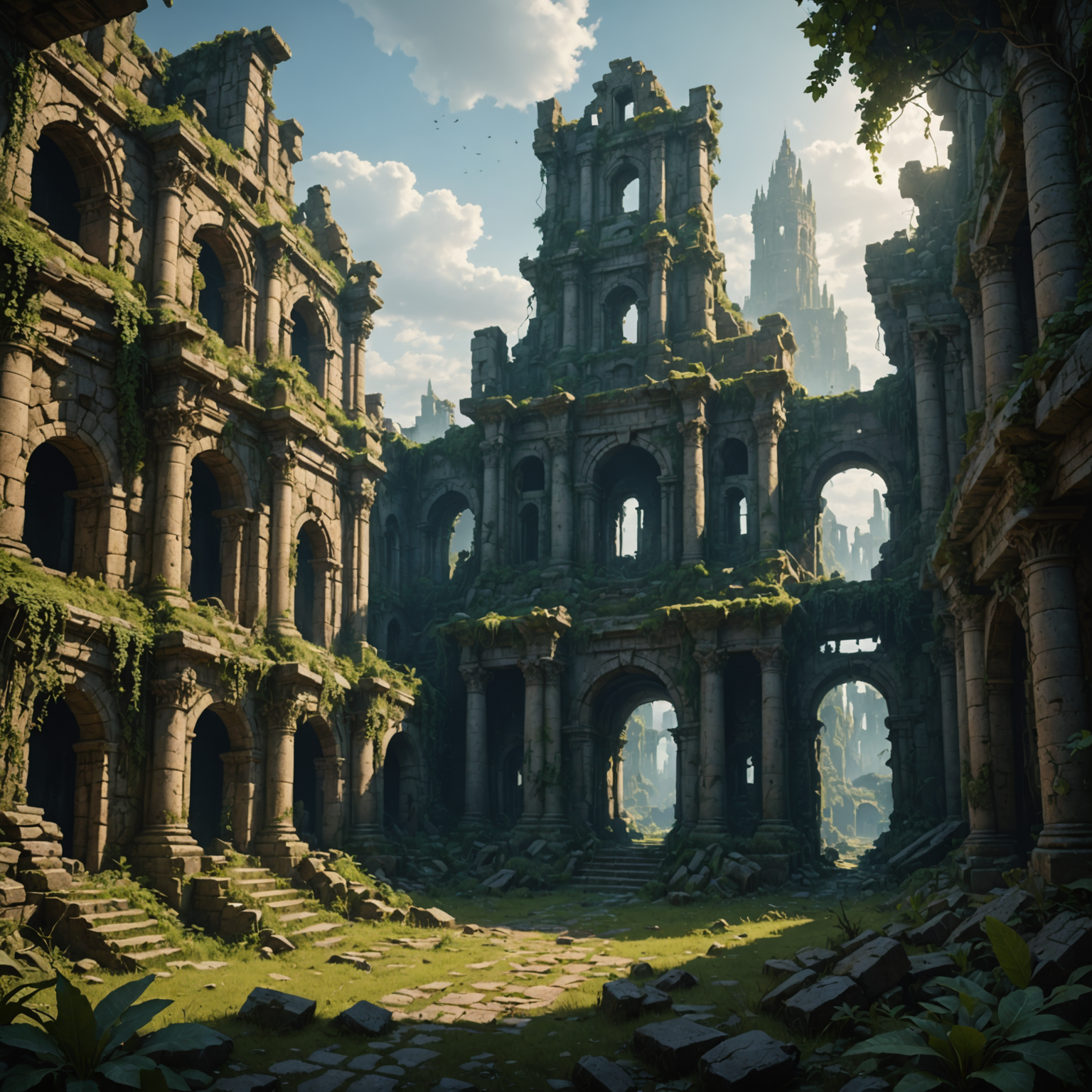
An ancient kingdom lies silent beneath layers of stone, vegetation, and passing time. Once shaped by a powerful civilization, its grand structures now survive as broken walls, weathered towers, and overgrown paths. The setting captures the scale of a lost world while keeping its story deliberately open, inviting the viewer to imagine what happened before the kingdom fell into ruin.
A World Shaped by Time
The environment is built around the contrast between human ambition and natural reclamation. Large architectural remains suggest that the kingdom was once prosperous and influential, yet no single structure appears untouched by decay. Cracked surfaces, collapsed sections, and scattered fragments give the scene a sense of age. Vegetation winds through the ruins, softening hard edges and showing how steadily nature has taken control.
This combination of monumental architecture and quiet deterioration makes the environment feel larger than the visible scene. The surviving fragments hint at roads, courtyards, halls, and other parts of a city that may once have extended far beyond the frame. Each remnant becomes evidence of a vanished culture rather than simple background decoration.
Depth, Scale, and Atmosphere
Layering is central to the scene’s sense of realism. Foreground details establish the texture of the ruined ground, while partially obscured structures lead the eye deeper into the environment. Distant forms help communicate the kingdom’s former scale, creating the impression that the visible remains are only one section of a much larger settlement.
Soft light filtering through the ruins adds atmosphere without overwhelming the architecture. Highlights draw attention to important shapes and worn surfaces, while shadows conceal parts of the setting and create a feeling of uncertainty. This balance allows the image to feel peaceful and mysterious at the same time. The quiet lighting also reinforces the absence of the people who once inhabited the kingdom.
Ruins as Fantasy Storytelling
Ruined environments are especially effective in fantasy world-building because they carry history without requiring a detailed explanation. A fallen city can reveal the ambitions, resources, and craftsmanship of an earlier age while leaving its final chapter unknown. The architecture may suggest authority and wealth; its damaged condition raises questions about the forces that brought that power to an end.
Within a setting like this, the remaining paths and structures could lead toward forgotten chambers, buried artifacts, or fragments of knowledge. These possibilities do not need to be shown directly. The strongest environmental storytelling often comes from the traces left behind: a monumental entrance, a broken route through the vegetation, or a surviving section of masonry that hints at a much richer past.
A Setting Built for Exploration
The ancient ruined kingdom works as more than a picturesque fantasy backdrop. Its decayed architecture, natural overgrowth, and carefully controlled light create a setting with emotional and narrative weight. Viewers can read it as a reminder of impermanence, a place of discovery, or the opening location for a larger adventure.
By combining the remains of civilization with the steady growth of nature, the environment presents transformation as an ongoing process. The kingdom may be forgotten, but its ruins continue to communicate its former importance—and leave space for new stories to begin.