
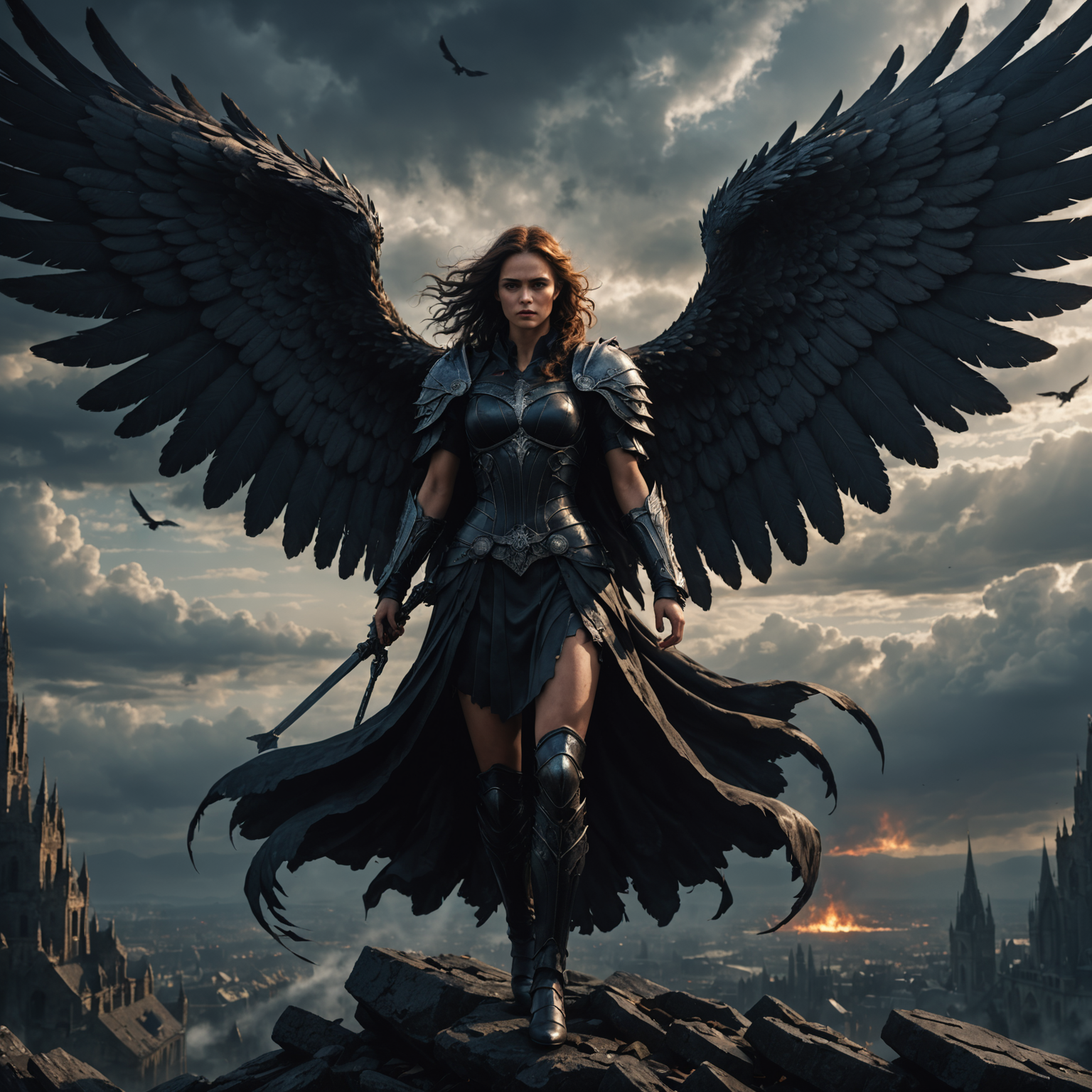
This dark angel fantasy artwork portrays a winged warrior suspended between two worlds. Set against a fractured sky of shadow and fading light, the figure becomes the clear focus of the composition. The broad wings create an imposing silhouette, while the restrained glow along their edges introduces a fragile sense of hope within an otherwise somber scene.
A Guardian Shaped by the Fall
The central character suggests a being who once belonged to a higher realm but now stands apart from it. This idea gives the image its emotional weight. The figure is not presented as simple evil; instead, the pose conveys discipline, endurance, and a controlled strength formed through hardship. Behind that apparent calm lies the possibility of conflict, regret, or a decision that permanently changed the character’s path.
Dark angel imagery works especially well when it leaves the meaning of the fall open to interpretation. The character might be a guardian who rejected an old command, a warrior separated from the purpose they once served, or a fallen protector still watching over a world that no longer accepts them. Each reading adds a different layer to the same visual moment.
Light, Shadow, and Visual Contrast
The broken sky reinforces the sense of upheaval. Its fractured forms suggest that the world around the character has been damaged, transformed, or viewed through the memory of a past disaster. Muted lighting keeps the atmosphere cinematic and mysterious, while the dim illumination around the wings prevents the figure from disappearing completely into the darkness.
This contrast is central to the artwork’s mood:
- Wide wings emphasize scale, power, and the character’s connection to the skies.
- Fading light suggests distance from a former home or source of purpose.
- Deep shadows create uncertainty around the figure’s history and intentions.
- The fractured backdrop mirrors a journey marked by loss, change, and inner tension.
A Story Left Open to the Viewer
Rather than explaining the character’s past, the image uses atmosphere and posture to invite questions. Is the guardian defending something, waiting for judgment, or preparing to make one final choice? The controlled stance may indicate confidence, but it can also feel like restraint—the effort required to keep painful memories or powerful emotions hidden.
That ambiguity makes the scene compelling. The figure can represent redemption without being defined by it, or power without appearing free from consequence. Light and darkness are treated less as opposing forces than as parts of the same identity. The angel’s fall may have brought corruption, but it may also have brought knowledge that could never have been gained through obedience alone.
The Mood of Dark Angel Fantasy Art
At its strongest, dark angel fantasy art combines dramatic design with a character-driven sense of mystery. The wings provide an immediately recognizable fantasy symbol, while the damaged sky and subdued glow turn that symbol into something more personal. This is a portrait of a fallen guardian, but it is also an invitation to imagine the choices, losses, and unfinished purpose behind the silhouette.