
A Sentinel in the Ruins
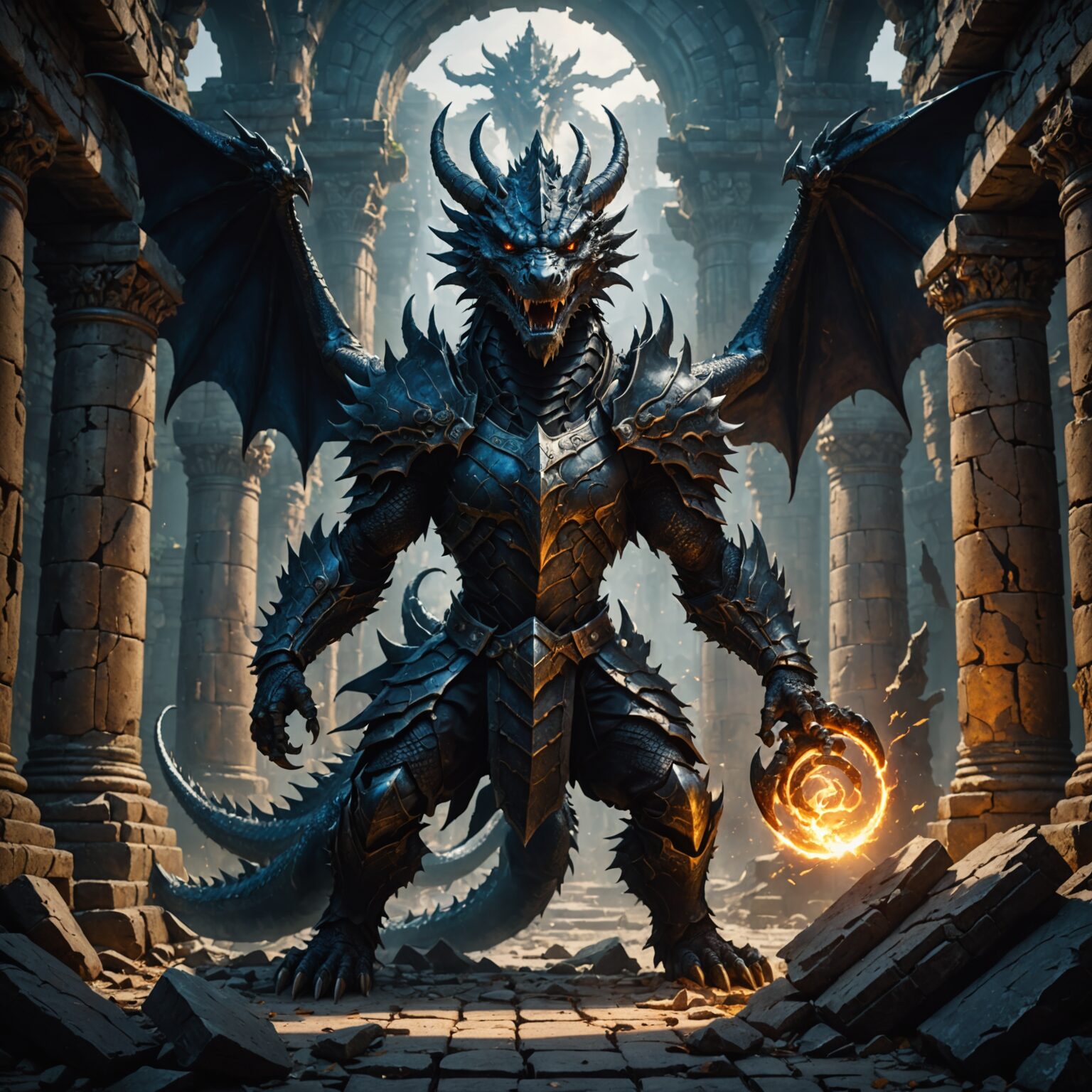
At the center of a forgotten temple, a shadow dragon stands watch among broken stone and ancient relics. The creature’s stillness feels deliberate rather than peaceful: it appears ready to respond to anything that threatens the sanctuary. Its role as guardian gives the scene a strong narrative focus, suggesting that the ruined structure contains a history or secret worth protecting.
The composition places the dragon directly within the remains of the temple, making its silhouette the dominant feature. Shattered pillars and weathered masonry frame the figure, while moss-covered surfaces reveal how thoroughly time has reclaimed the site. Even in decay, the temple retains an atmosphere of importance, as though its sacred purpose has not entirely disappeared.
A Dragon Made of Shadow and Light
The guardian’s obsidian-colored scales absorb much of the surrounding darkness, yet faint highlights move across their surfaces with an almost liquid appearance. Those subtle reflections define the dragon’s form without diminishing its mysterious character. The wings, claws, and sharply shaped features emerge gradually from the gloom, creating a balance between concealment and visibility.
Its poised stance reinforces the impression of controlled strength. The claws rest lightly against the ancient stone, but the tension in the posture suggests that the creature could strike without warning. Rather than relying on motion, the artwork presents power through restraint: the dragon does not need to attack to establish that it is in command of the space.
Light Filtering Through the Temple
Broken arches allow narrow beams of light to enter the sanctuary. These rays pass through the darkness and illuminate suspended dust, adding depth to the ruined interior. The contrast between the dim temple and the brighter shafts of light draws attention to the dragon’s scales and edges while giving the surrounding architecture a layered, three-dimensional quality.
This lighting also strengthens the image’s central theme. Shadow does not represent simple emptiness; it is the element in which the guardian belongs. Light reveals the dragon in fragments, while darkness connects it to the temple and the secrets implied by the ruins. Together, the two create a cinematic mood of tension, reverence, and quiet endurance.
Ancient Stones, Forgotten Vows
Weathered engravings and collapsed columns hint at a civilization that once treated the temple as a sacred place. The visible remains do not explain its full story, leaving room for the viewer to imagine the vows, ceremonies, or lost knowledge associated with it. The dragon’s presence gives those traces of history a continuing purpose: the sanctuary may be damaged, but it is not unguarded.
At the same time, the fragile ruins and immense creature create a compelling contrast. Stone has fallen, carvings have faded, and vegetation has spread across the remains, yet the guardian continues its vigil. The image therefore becomes a visual statement about resilience—the persistence of a protector even as the world around it changes.
A Cinematic Fantasy Artwork
Rendered with sharp detail, the scene emphasizes the texture of individual scales, the rippling edges of shadow, and the worn surfaces of the temple. Its centered composition and dramatic illumination give the artwork an epic, cinematic quality while keeping the story intimate: one ancient protector, one forgotten sanctuary, and an unanswered mystery beneath the ruins.